
A pilot study funded through the audioanalgesia pilot program is now under way at the Yale School of Nursing, and its protocol has been posted as a preprint on medRxiv.
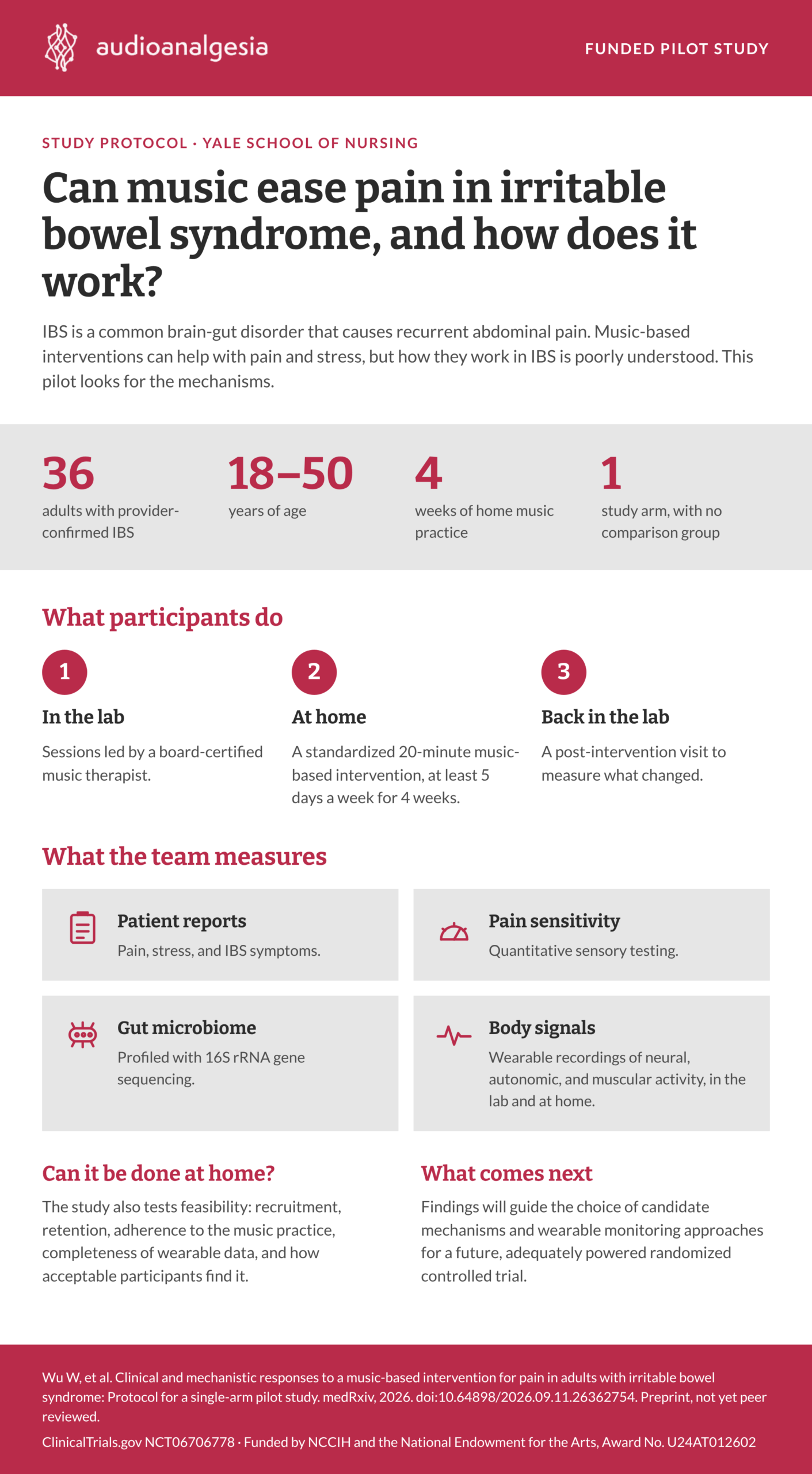
Irritable bowel syndrome (IBS) is a common brain-gut disorder that causes recurrent abdominal pain. Music-based interventions have shown benefits for pain and stress, but little is known about how they work in IBS. This single-arm pilot study looks for the mechanisms.
The study
- Participants: 36 adults, ages 18 to 50, with provider-confirmed IBS
- Intervention: lab sessions led by a board-certified music therapist, followed by four weeks of home practice with a standardized 20-minute music-based intervention at least five days a week
- Measures: pain, stress, and IBS symptoms; quantitative sensory testing; gut microbiome profiling; and wearable recordings of neural, autonomic, and muscular activity in the lab and at home
- Feasibility: recruitment, retention, adherence, wearable data completeness, and acceptability to participants
Findings will guide the choice of candidate mechanisms and wearable monitoring approaches for a future, adequately powered randomized controlled trial.
Read the protocol: Wu W, et al. Clinical and mechanistic responses to a music-based intervention for pain in adults with irritable bowel syndrome: Protocol for a single-arm pilot study. medRxiv. 2026. doi:10.64898/2026.09.11.26362754. This is a preprint and has not yet been peer reviewed. ClinicalTrials.gov: NCT06706778.